


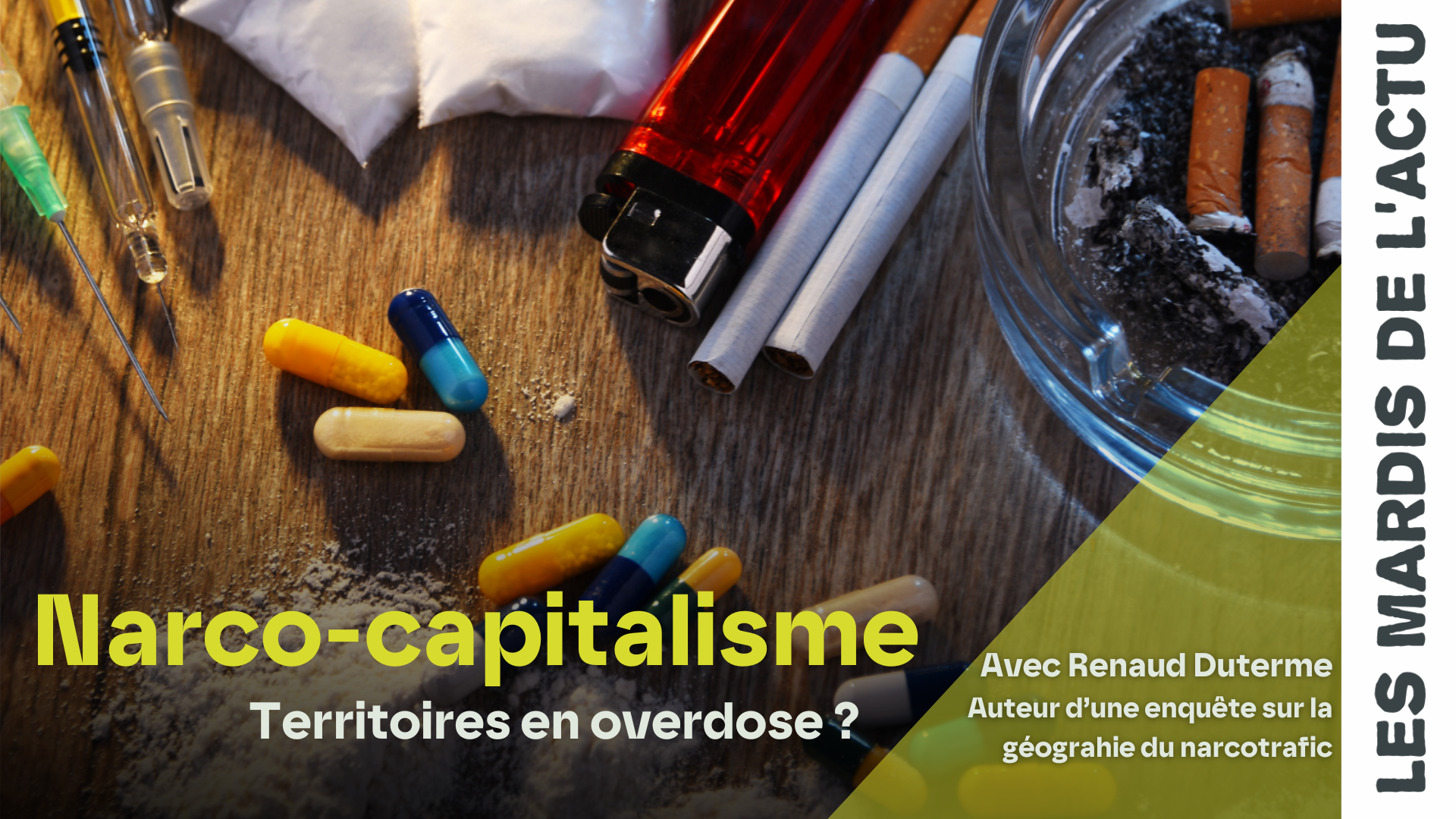
News Tuesdays - Narco-capitalism: Territories in overdose?
-
congress

Hello everyone,
In recent years, a strange word has crept into critical analyses of the global economy: narco-capitalism. A term that evokes Mexican cartels as much as international finance, the fumes of clandestine laboratories as the skyscrapers where billions are laundered. A disturbing term, because it describes a system where the illegal and legal economies are no longer truly opposed, but rather feed off each other.
Narco-capitalism: Territories in overdose?
Drug trafficking is not a marginal outgrowth of capitalism: it is simultaneously a symptom, a product, and sometimes… a driving force. From the countryside of Latin America to European ports, drugs shape territories, redraw routes, finance infrastructure, and compensate for the economic crises that capitalism itself generates.
When states withdraw their support, when jobs become scarce, when inequality skyrockets, the drug market fills the void. It's an ultra-globalized, adaptable, organized market, fully driven by profit motives.
But how did we get here? Why do drug trafficking routes so closely resemble global trade routes? How do prohibition policies, far from drying up trafficking, sometimes strengthen its structures? And above all: what does this reality tell us about the broader excesses of contemporary capitalism?
To trace the geohistory of drug trafficking, we will have the pleasure of listening to Renaud Duterme (Geographer). To do the geohistory of drug trafficking is above all to understand our interconnected world and the concrete impacts of globalized capitalism on populations and territories.
Where does it take place?
Chez René·e
Rue du Marché-au-Beurre 22
Arlon
Belgique
by 
Weather forecast (Arlon)
Otherwise… check out the agenda

see all the things
to do around you


Hey, don’t go away...
Get the best
outings around you
All the best deals
events
spots